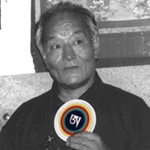
Chögyal Namkhai Norbu was born in 1938
in Derghe, in Eastern Tibet and was recognised at birth as the
reincarnation of a noted exponent of the Dzog-chen tradition.
Notwithstanding his youth, he was already well known by the end of the
1950s as a person with a profound knowledge of the Dzogchen teachings
and also as a spiritual teacher.
His fame, in India and in Tibet was such that in 1960 Professor
Giuseppe Tucci, an eminent scholar and founder of the Is.MEO (one of
the major institutes of oriental studies in Italy), invited him to Rome
to collaborate in research at what is today known as Is.I.A.O,
(Istituto per l'Africa e l'Oriente).
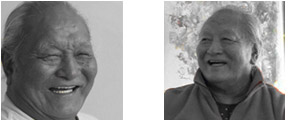
It was thus that
Namkhai Norbu came to Italy where
he contributed actively in the development of Tibetan studies in the
West.
|
In 1962 he took up a post
teaching Tibetan
language and literature in Naples at the Istituto Universitario
Orientale di Napoli where he worked until 1992.
From the mid
seventies Namkhai Norbu began to
teach Yantra Yoga and Dzogchen meditation to a few Italian students and
the growing interest in his teachings convinced him to dedicate himself
increasingly to such activities.
|
|
For the first fifteen years of his
residence in Italy Namkhai Norbu concentrated mainly on the Ancient
History of Tibet. His works are evidence of his deep knowledge of
Tibetan culture and are addressed to the young people of Tibet in order
that their awareness of an ancient cultural heritage should not die
out. The works of Namkhai Norbu are a significant reference point for
these young people, whether they live in the People's Republic of China
or whether they are living in exile and represent the continuation of
the cultural heritage of Tibet and its national identity. His studies
have become so well known at an international level that he has an
intense programme of lectures and seminars in the major centres of
oriental studies and in universities throughout the world.
Together with a number of
students he founded the
first Dzogchen community in Arcidosso in Tuscany and then later founded
other centres in various parts of Europe, Russia, the United States,
South America and Australia.
|